
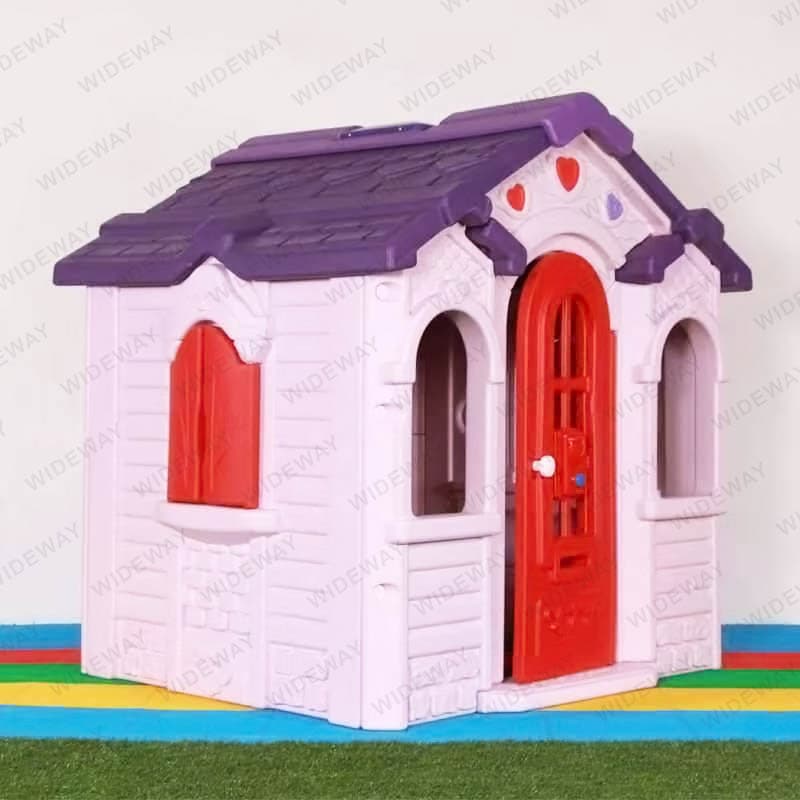
Quels sont les accessoires essentiels pour la salle de jeux de vos enfants?
1. Meubles
Chaque maison de jeux a besoin de meubles pour la rendre confortable et confortable. Une table et des chaises ensemble, un petit canapé, ou des sacs de haricots ferait de grandes options.2. Eclairage
Une lampe mignonne, des lumières fées ou des lanternes à piles peuvent transformer la maison en un lieu magique.3. Décorations de maison de jeux
Les décorations peuvent rendre la maison de jeux plus attrayante et plus amusante. Les parents peuvent impliquer leurs enfants dans ce processus en leur permettant de choisir quelques autocollants, rideaux ou art mural qui reflètent leur personnalité et leurs intérêts.4. Mat extérieur
Les tapis extérieurs sont pratiques pour les maisons de jeux car ils gardent l'intérieur propre en réduisant les débris de pas. Un tapis extérieur durable assure le confort et le nettoyage facile.5. Jouets et jeux
Les jouets et les jeux comme les puzzles de sol, les planches à dessin et les jeux de société pourraient fournir des heures de divertissement.Conclusion
Une maison de jeux dans votre jardin est un excellent investissement pour le bien-être physique et émotionnel de votre enfant. Avec les bons accessoires, vous pouvez créer un environnement amusant et sûr qui encourage le jeu imaginatif et les activités de plein air. Envisagez d'ajouter des meubles, éclairage, décor, un tapis extérieur, et quelques jeux amusants, et la maison de jeux de votre enfant sera un endroit favori pour eux et leurs amis.Ningbo Longteng Outdoor Products Co., Ltd. est un fabricant fiable et expérimenté de produits de plein air. Avec notre passion pour les activités de plein air, nous nous spécialisons dans la conception et la production de maisons de jeux, de swing sets et d'autres accessoires extérieurs de haute qualité pour améliorer votre espace extérieur. https://www.nbwidewaygroup.com et contactez-nous à [email protected] pour de plus amples renseignements.
Documents de recherche scientifique sur les avantages des jeux pour enfants en plein air
Ajzen, I. (1991). La théorie du comportement planifié. Comportement organisationnel et processus de décision humaine, 50(2), 179-211.
Kellert, S. R., et Wilson, E. O. (1993). L'hypothèse de la biophilie. Island Press.
Cobb, E., & Rowe, D. (2019). Apprentissage basé sur la nature : une exploration des relations entre les jardins scolaires et l'apprentissage des enfants. Journal of Environmental Education, 50(1), 1-12.
Taylor, A. F., Kuo, F. E., et Sullivan, W. C. (2001). Faire face àADD: La connexion surprenante aux réglages de jeu vert. Environnement et comportement,33(1), 54-77.
"Je suis un homme de famille,2001)) L'environnement naturel comme terrain de jeux pour les enfants : l'impact des activités de jeux en plein air dans les écoles préprimaires.29(2), 111-117.
Bagot, K. L., Allen, F. C. L., et Toukhsati, S. R. (2015). Perception de la verdure et perception de la réparabilité des campus universitaires en Australie.14(3), 872-882.
Taylor, A. F., & Kuo, F. E. (2006). Le contact avec la nature est-il important pour le développement sain de l'enfant? État des faits. Dans C. Spencer, B. Blades, & M. Sarre (Eds.), Les enfants et leur environnement: apprentissage, utilisation et conception d'espaces (p. 124–140). Cambridge University Press.
Louv, R. (2005). Dernier enfant dans les bois : sauver nos enfants du trouble de la nature. Livres algonquins.
Gill, T. (2014). Les avantages de l'engagement des enfants avec la nature: Une revue de littérature systématique. Enfants, jeunes et milieux, 24(2), 10-34.
Cordle, B. (2015). Jouons dehors: explorer le jeu basé sur la nature pour les enfants dans un monde urbanisé. Revue internationale de l'éducation environnementale de la petite enfance, 3(1), 16-32.
Wells, N. M. (2000). Chez soi avec la nature: Effets de la «vertérance» sur le fonctionnement cognitif des enfants. Environnement et comportement, 32(6), 775-795.